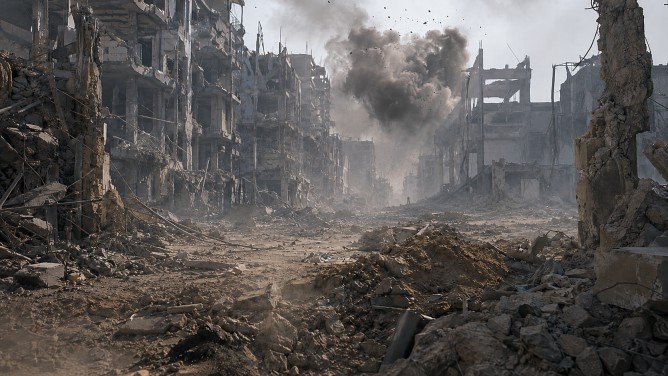
The ongoing Israeli military operations in southern Lebanon have intensified the rift between Hezbollah and the Lebanese state, leaving local communities in a precarious position as they navigate between two sources of security. For many years, Hezbollah has established a comprehensive network of social services, offering housing, healthcare, education, and financial aid to those affected by conflict. These services have become increasingly vital for residents displaced by the latest hostilities, particularly as Lebanon’s financially troubled government struggles to provide similar support.
In response, the Lebanese government is working to bolster state authority and regain public trust, particularly in regions previously under Hezbollah’s influence. Efforts are underway by the Lebanese army to undertake reconstruction and infrastructure projects in areas recently relinquished by Israeli forces, with the aim of enhancing the visibility of government institutions among local populations. Despite these efforts, significant hurdles remain for the state.
Continuous Israeli military actions in southern Lebanon have eroded public confidence in the government’s capacity to safeguard its citizens. While some residents express dissatisfaction with the government’s response, others hold Hezbollah accountable for perpetuating cycles of conflict. Lebanese officials acknowledge that mere security measures will not suffice to rebuild trust among Hezbollah’s supporters. They emphasize the need for improved public services, greater political inclusion, and enhanced economic opportunities to encourage communities to rely more on state institutions.
The delicate issue of disarming Hezbollah is further complicated by these dynamics. Lebanese authorities are under pressure to assert state control over weaponry, yet they must avoid giving the impression of colluding with Israel against southern Lebanese communities. Officials caution that reestablishing meaningful state authority will remain a formidable challenge unless Israeli military operations and occupation in southern Lebanon cease. Until then, Hezbollah continues to be perceived by many residents as a more dependable source of protection and assistance compared to the financially strapped Lebanese state.