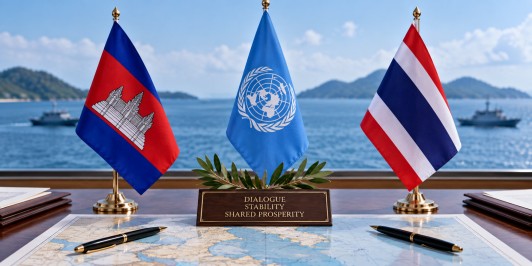
Cambodia and Thailand have embarked on a United Nations-facilitated conciliation effort to address their longstanding maritime boundary conflict in the Gulf of Thailand. This initiative is part of the United Nations Convention on the Law of the Sea (UNCLOS) framework, aimed at resolving disputes through peaceful means. During the inaugural meeting, the foreign ministers from both nations delivered statements reflecting their positions and commitment to the process.
The primary objective for Cambodia is to establish a definitive maritime boundary with Thailand. However, as an alternative, Phnom Penh has offered a proposal for a joint development arrangement that would enable shared exploitation of resources in the contested zone. Thailand, on the other hand, emphasized the need for the discussions to concentrate solely on maritime boundary delimitation. The Thai government has expressed its willingness to engage sincerely in the proceedings, although it had previously favored direct negotiations as a means to settle the dispute.
The disputed region, covering around 26,000 square kilometers, has been a point of contention between the two countries for over a quarter of a century. It is believed to hold substantial reserves of natural gas and oil, underscoring the economic importance of the issue. In 2001, both nations agreed on a framework for the joint development of these resources. However, this arrangement was terminated by Thailand in May, following heightened tensions due to violent border clashes.
In June, Cambodia initiated the mandatory UNCLOS conciliation process. This process involves an independent panel that can make recommendations to both parties. While the panel’s findings are not legally binding, they are expected to guide the negotiations and possibly lead to a resolution. Both countries’ participation in this UN-backed process marks a significant step towards potentially settling the dispute that has strained bilateral relations for decades.