
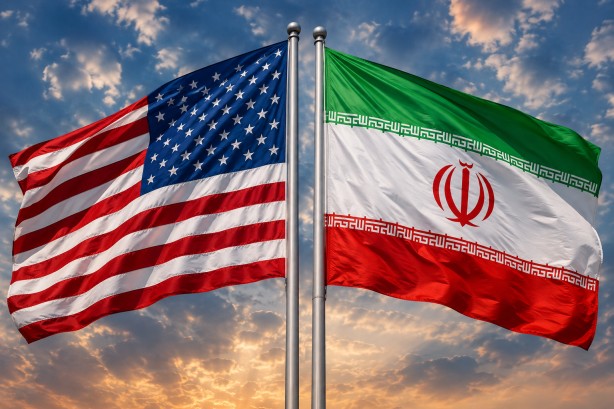
The United States and Iran have experienced a significant surge in military tensions following their most intense exchange of strikes since agreeing to an interim ceasefire last month. The U.S. initiated a series of airstrikes targeting around 80 sites associated with Iran’s military capabilities. According to U.S. statements, the objective was to mitigate threats to navigation freedom in the Strait of Hormuz. This move by the U.S. came on the heels of Iran targeting three commercial vessels navigating through this strategically crucial waterway.
In retaliation, Iran launched missiles and drones at U.S. military bases located in Bahrain and Kuwait. Additionally, Iran unveiled a new military doctrine, declaring that it would treat the U.S. and its regional allies as equivalent targets in any future engagements. U.S. President Donald Trump issued a warning that Washington was prepared to undertake further military measures if Iran persisted with its attacks. Nonetheless, he expressed that he did not foresee the situation escalating into a prolonged conflict.
The recent hostilities have considerably strained the ceasefire agreement, which was intended to pave the way for discussions around Iran’s nuclear program, potential sanctions relief, and long-term security arrangements within the Strait of Hormuz. While Iran asserts its right to oversee shipping activities through the strait, the United States contends that Iran’s recent attacks on commercial vessels infringe upon international maritime security, thus warranting the U.S. military response.
This renewed conflict has also affected global oil markets, leading to higher prices due to rising concerns over possible disruptions in one of the world’s most vital energy shipping routes. The Strait of Hormuz remains a critical artery for global oil supply, and any instability in the region can have far-reaching implications on energy security worldwide.