
In a significant move to bolster its economic landscape, Việt Nam’s Politburo has set ambitious targets through recent resolutions, signaling a shift from merely expanding the number of enterprises to nurturing corporations that can compete regionally and globally. Resolution No. 68-NQ/TW, issued in May last year, outlines a goal of having 2 million active enterprises by 2030, including at least 20 large corporations integrated into global value chains. Following this, Resolution No. 79-NQ/TW, released in January, targets 50 state-owned enterprises to rank among Southeast Asia’s top 500 companies and up to three to make it into the world’s top 500 by the same year.
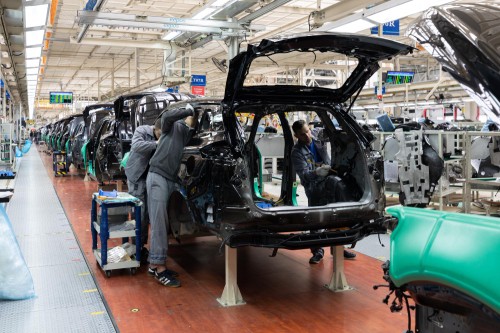
The resolutions aim to develop state-owned economic groups with significant scale, modern technology, and international competitiveness, serving as leaders in integrating domestic enterprises into global supply chains. As Việt Nam approaches 40 years since the Đổi mới reforms (1986–2026), it has already seen the rise of major economic groups. Notable examples include THACO, which has established a vast automobile production ecosystem in Quảng Nam Province, and VinFast, the country’s first electric vehicle manufacturer, which has made a mark with its Nasdaq listing and international sales in markets like North America and Europe.
Additionally, Hòa Phát Group has emerged as one of Southeast Asia’s leading steel manufacturers, competing with international giants, while FPT has become a key player in information technology across numerous countries. Vinamilk and Masan Group have also made significant strides in consumer goods, with expansive footprints in global markets. Meanwhile, in infrastructure and real estate, Vingroup’s projects have set new benchmarks in scale, and companies like Sun Group and BRG Group have invested heavily in tourism infrastructure.
Despite these advancements, experts like Đậu Anh Tuấn of the Vietnam Chamber of Commerce and Industry highlight that while the business sector is extensive, it lacks depth and capacity. Economist Trần Đình Thiên and others emphasize the need for a strategic focus on industrial development, suggesting that Việt Nam should learn from international examples like Japan, South Korea, and China, which have successfully built competitive industrial ecosystems through targeted support and strategic investment in priority industries.
The resolutions are seen as a synchronized policy framework for enterprise growth, but the real challenge lies in implementation. If Việt Nam can effectively execute these plans, the next decade could witness the emergence of economic groups with regional stature, positioning the country as a formidable player in global industrial value chains, and realizing its aspiration for a robust international presence.