
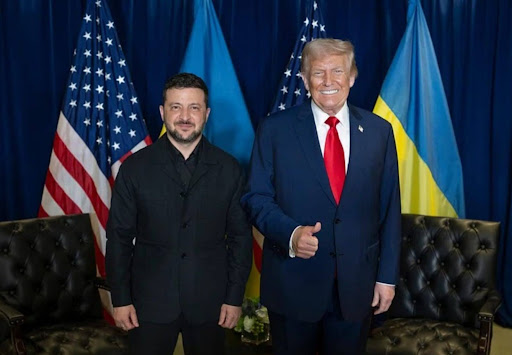
It took a war, seven deaths, and millions of dollars in losses for the United States to accept what Ukraine had been offering for free months earlier. The story of how Washington went from dismissing Kyiv’s drone defense proposal to urgently requesting its implementation is a case study in how political bias can override strategic logic in high-stakes decision making.
Ukraine’s proposal was born out of necessity and battlefield experience. Russia’s sustained use of Iranian-designed Shahed drones against Ukrainian targets forced Kyiv to develop an entire counter-drone infrastructure from scratch. The result was a suite of low-cost interceptor systems and sensors that proved effective in real combat. Ukraine recognized that this same technology was directly applicable to the threat American forces faced in West Asia.
The August 18 White House briefing laid out the case comprehensively. Zelensky’s team presented maps, strategic recommendations, and a specific warning about Iran’s improving attack drone capabilities. The proposal called for establishing regional “drone combat hubs” in Jordan, Turkey, and Gulf states to create an integrated defense network around American military positions.
The Trump administration’s failure to act on the proposal has multiple explanations. Some officials viewed the Ukrainian pitch skeptically, interpreting it as Zelensky leveraging the relationship rather than offering substantive strategic help. Trump himself reportedly expressed interest, but the follow-through never came. The gap between interest and action proved fatal.
Washington’s eventual outreach to Kyiv came after the conflict’s casualties began mounting. Ukraine responded with characteristic speed, deploying a specialist team to Jordan within 24 hours of receiving the request. Zelensky confirmed that additional deployments to Qatar, the UAE, and Saudi Arabia were also underway. The partnership that could have saved lives is finally in place.