
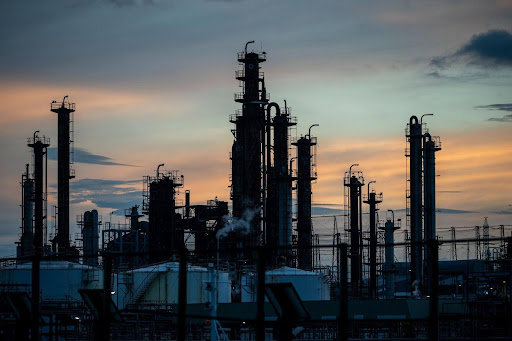
Financial markets worldwide were rocked Thursday as surging oil prices and widening violence across the Middle East combined to create the most significant economic shock in years. Brent crude rose around 6% to nearly $98 a barrel after briefly topping $100, as Iran stepped up strikes against energy targets across the Gulf region. Stock markets in Asia fell sharply and European gas prices surged.
Iran struck shipping vessels near the Strait of Hormuz, forcing Oman to evacuate its main export terminal at Mina Al Fahal. Iraq suspended crude oil exports from all its ports following attacks on nearby tankers. In Bahrain, residents were told to remain at home after Iranian forces struck fuel storage tanks in the Muharraq Governorate.
The IEA announced an unprecedented coordinated release of 400 million barrels of emergency crude oil from the reserves of its 32 member nations. The United States said it would contribute 172 million barrels from its Strategic Petroleum Reserve, with Energy Secretary Chris Wright confirming that deliveries would begin the following week and take around 120 days. Despite the intervention, prices climbed as new violence overshadowed the supply boost.
President Trump pledged to continue the campaign against Iran and framed the reserve release as a temporary measure to ease prices. Iran’s military leadership countered by warning of $200-per-barrel oil, claiming that the US had destabilized regional security. The standoff showed no signs of moving toward resolution.
Japan’s Nikkei 225 dropped 1.6% and South Korea’s Kospi fell 1.2% amid broad market anxiety. Goldman Sachs raised its Brent forecast for Q4 2026 to $71 a barrel. Deutsche Bank’s Jim Reid said investors are now pricing in a prolonged conflict with the potential to deliver a stagflationary shock to the global economy.